Every buyer building a hair brush range faces the same question early: detangling brush or paddle brush? They look similar on a shelf, sit at similar price points, and are often sourced from the same factory — but they sell to different customers, at different velocities, with different return profiles.
This comparison is written from the production floor. We have molded plastic hair brushes and combs in Ningbo, China since 2012, and we ship private label programs to distributors, salon chains and retail brands in more than 40 countries. Here is how the two brushes actually differ, and how to decide what goes into your first container.
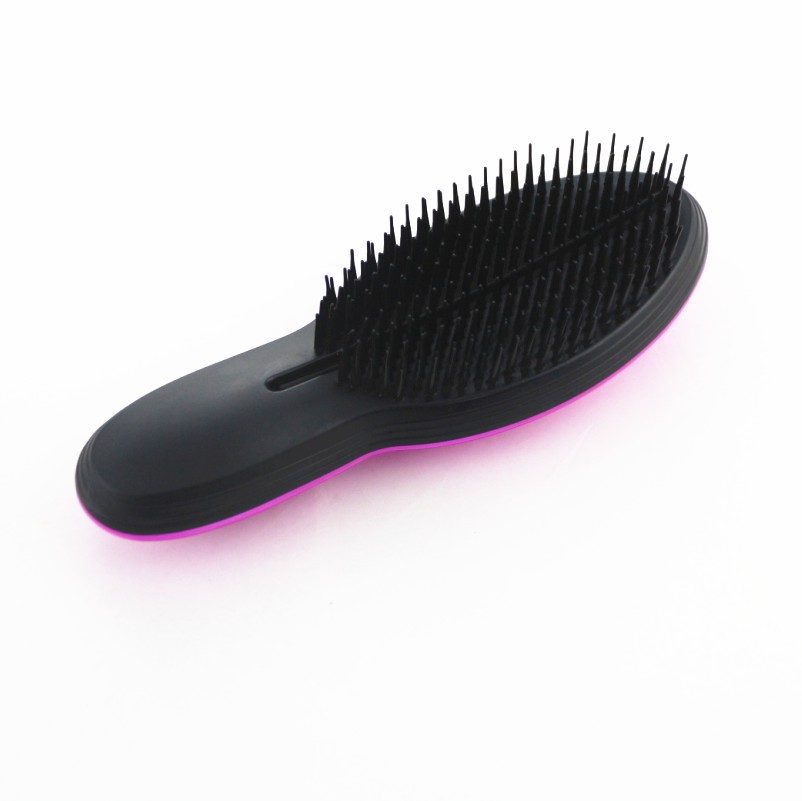
The Short Answer
| Detangling Brush | Paddle Brush | |
|---|---|---|
| Core job | Separate knots with minimal breakage | Smooth and finish hair, especially during blow-dry |
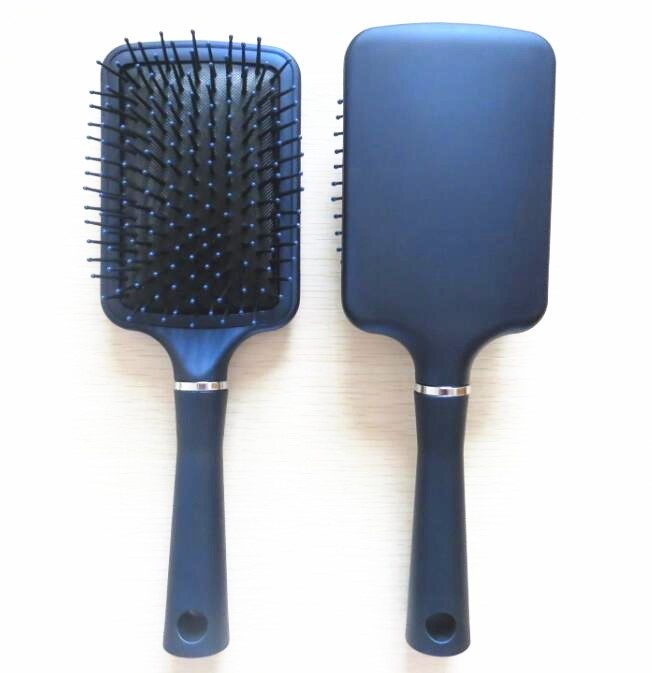
| Bristle layout | Flexible, widely spaced pins, often on a vented or flex cushion | Dense bristle field over a broad flat cushion |
| Best hair type | Curly, wavy, fine, tangle-prone, kids, wet hair | Straight to wavy, medium to long, thick hair |
| Typical retail price | Lower band | Mid to upper band |
| Sell-through speed | Fast, high units | Slower, higher value per unit |
| Return risk | Ball tips detaching, pins bending | Cushion glue failure, heat damage, static |
| Best channel fit | Beauty supply, pharmacy, e-commerce, kids | Salon, gift sets, premium retail, department stores |
If you can only launch one SKU, launch the detangling brush — it is the easier sell and the faster turn. If you are building a range, stock both: they convert different shoppers, and they bundle into sets that lift average order value.
1. They Solve Two Different Problems
A detangling brush is a problem-solving tool. Its job is to get through a knot without ripping hair, which is why the bristles are flexible, spaced further apart, and mounted on a cushion that gives way instead of fighting the tangle. That flexibility is what lets a parent brush a child's wet hair without tears — one of the strongest purchase motivations in the entire hair accessories category.
A paddle brush is a finishing tool. Its job is to smooth a section of hair and distribute tension evenly across a wide surface. The dense bristle field and large head make it the default choice for blow-drying straight or wavy hair, and the reason it appears in almost every salon and hotel amenity program.
Put simply: one removes a problem, the other delivers a result. That difference drives everything downstream — pricing, packaging, marketing claims, and which customer walks out with it.
2. Your Customer Decides the Winner
| Channel or segment | What they buy | Why |
|---|---|---|
| Beauty supply and ethnic hair care | Detangling brush, wide-tooth comb | High-frequency replacement, texture-specific needs, strong repeat purchase |
| Pharmacy and mass retail | Detangling brush, entry-price paddle | Impulse price points, gifting, family purchase |
| Salon and barber channel | Paddle brush, round brush | Professionals buy for finish and durability, not novelty |
| E-commerce and marketplaces | Detangling brush first, sets second | Video-demo friendly, strong search demand, easy to bundle |
| Gift and promotional | Paddle brush in sets, logo-printed comb | Higher perceived value per unit, better for corporate gifting |
| Kids and school | Mini detangling brush | Soft tips, bright colors, low price, seasonal peaks |
A distributor selling to salons who orders detangling brushes only will watch them sit; the salon buys what produces a finish. A pharmacy that stocks only paddle brushes loses the fastest-moving item in the aisle. Match the SKU to the shelf, not to your personal preference.
3. Why They Sell Differently
| Indicator | Detangling Brush | Paddle Brush |
|---|---|---|
| Units per turn | High — often the volume driver of the category | Moderate |
| Average selling price | Lower | Higher |
| Repeat purchase | High (wear, loss, family multi-buy) | Lower (longer replacement cycle) |
| Markdown risk | Low — low ticket absorbs discounting | Higher — slower turns invite clearance |
| Margin per unit | Thinner | Thicker |
| Best role in range | Traffic and volume | Margin and gifting |
The practical takeaway: the detangling brush pays your shelf rent, the paddle brush pays your margin. A range built only on paddles looks premium and turns slowly. A range built only on detanglers moves volume but struggles to reach a healthy average order value. The profitable structure is usually weighted toward detanglers in units, with paddle brushes carried as the higher-value option.
4. Three Ways to Stock Both Without Doubling Your SKUs
- Option A — 70/30 split. Roughly seven detangling SKUs to three paddle SKUs in your opening order. Covers volume and margin without over-committing shelf space.
- Option B — Bundle into a set. A detangling brush plus a paddle brush in one retail box converts one shopper into a two-unit sale and raises average order value immediately. Sets also justify better packaging and a higher shelf position — see our hairbrush set program.
- Option C — Share the handle, change the head. If both brushes use the same handle platform, you pay for one mold body and two heads instead of two complete tools. This is the single most effective cost lever in this category, and it is only available from a factory that owns its molds.
5. What Separates a Good Brush From a Return
Most complaints in this category are not about design — they are about five small components.
| Component | Failure mode | What to specify |
|---|---|---|
| Ball tips | Tips detach, sharp pin end exposed | Tip pull-force standard, no reuse of worn tip tooling |
| Bristle pins | Bend or snap under load | Nylon rather than brittle styrene, correct pin diameter |
| Cushion | Glue releases, cushion lifts from the base | Cushion bond tested after heat and water exposure |
| Body material | Warps near a blow-dryer, scratches in transit | PP with appropriate heat resistance; ABS only where surface hardness matters |
| Static | Hair clings and flies in dry climates | Anti-static additive in the pin or body compound |
For paddle brushes specifically, heat resistance is the silent return driver. A paddle used during blow-drying sits inches from hot air; pins that soften or a body that warps turn a premium SKU into a one-star review.
6. The Five-Minute Sample Test
Before you approve any sample, run these five checks. They catch most quality problems before a container ships:
- Tip twist test — twist every ball tip firmly with your thumbnail. Tips that rotate or slip off will fail in the field.
- Pull test — grip ten pins and pull steadily. Pins that come out with light force will shed into hair.
- Cushion flex — press the cushion hard at the edge and release. A slow or partial return signals weak bonding.
- Heat test — hold a paddle brush 15 cm from a hair dryer on high for two minutes. Pins should not soften or curl.
- Water soak — submerge both brushes for 30 minutes, then dry. Check for cushion lift, discoloration and glue residue.
Any sample that fails one of these should not become a purchase order, no matter how good the price looks.
7. Why Sourcing Both From One Factory Matters
Buying the two brush types from two suppliers creates three hidden costs: two sets of tooling quotes, two lead-time calendars, and two quality standards to police. A factory with an existing mold library removes all three — you select from ready cushion, paddle, vent and detangling molds, brand them, and ship them in one container.
Three questions worth asking any supplier before you commit:
- Do you own your molds, or rent time on someone else's? Mold ownership determines whether you can change a handle shape at all.
- Can you produce both heads on one handle platform? This is where your tooling budget is won or lost.
- What is the MOQ when two SKUs share one mold? Factories that own their tooling can usually combine quantities across colors.
Explore the current shapes in our plastic hair brush catalog, or read the full verification checklist in Private Label Hair Brush Manufacturer: 7 Checkpoints Before You Sign the Contract before you request quotes.
FAQ
Is a detangling brush better than a paddle brush?
Neither is better; they solve different problems. Detangling brushes separate knots with less breakage and suit curly, wavy, fine or tangle-prone hair. Paddle brushes smooth and finish straight to wavy hair, especially during blow-drying. Stocking both covers more shoppers than choosing one.
Which one sells better in retail?
Detangling brushes usually sell faster and in higher units, driven by low price points, video-friendly demos and repeat purchase. Paddle brushes turn more slowly but carry a higher price and margin per unit, and perform well in gift and salon channels.
Can both brushes be made on the same handle mold?
Yes, and it is the most effective cost reduction available in this category. One handle platform with two interchangeable heads means one body mold instead of two complete tools, which lowers tooling cost and simplifies color and logo consistency across your range.
What is a reasonable opening order for a two-SKU range?
Most buyers start with a volume-weighted split rather than an even one — roughly seven detangling SKUs to three paddle SKUs — and adjust after the first sell-through cycle. Ask your supplier whether quantities can be combined across colors when SKUs share a mold.
Can you print our logo on both brush types and pack them as a set?
Yes. Logo printing (silk screen for one to two colors, hot stamping for metallic finishes), custom handle colors and retail-ready set packaging are all available, and sets are typically packed with a printed sleeve or window box for shelf display.
Choosing between the two? We can send a sample pair — one detangling brush, one paddle brush, same handle platform — so you can run the five-minute test yourself before placing an order. Request a Sample Pair
Need a hair brush supplier?
We manufacture plastic hair brushes, detangling brushes and hairbrush sets in Ningbo, China. Get factory-direct prices with your logo.
Get a Quote