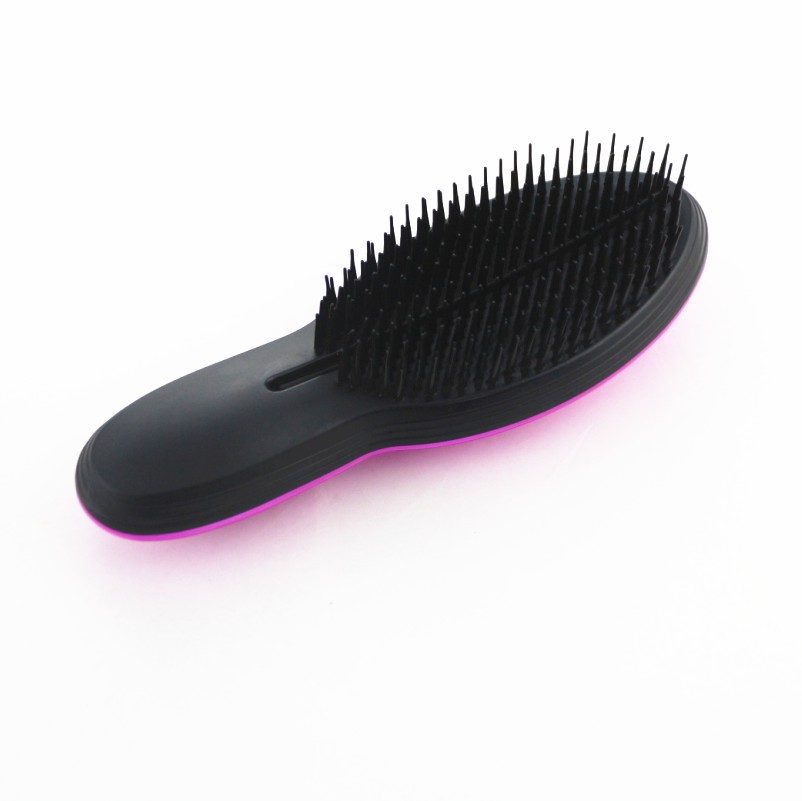
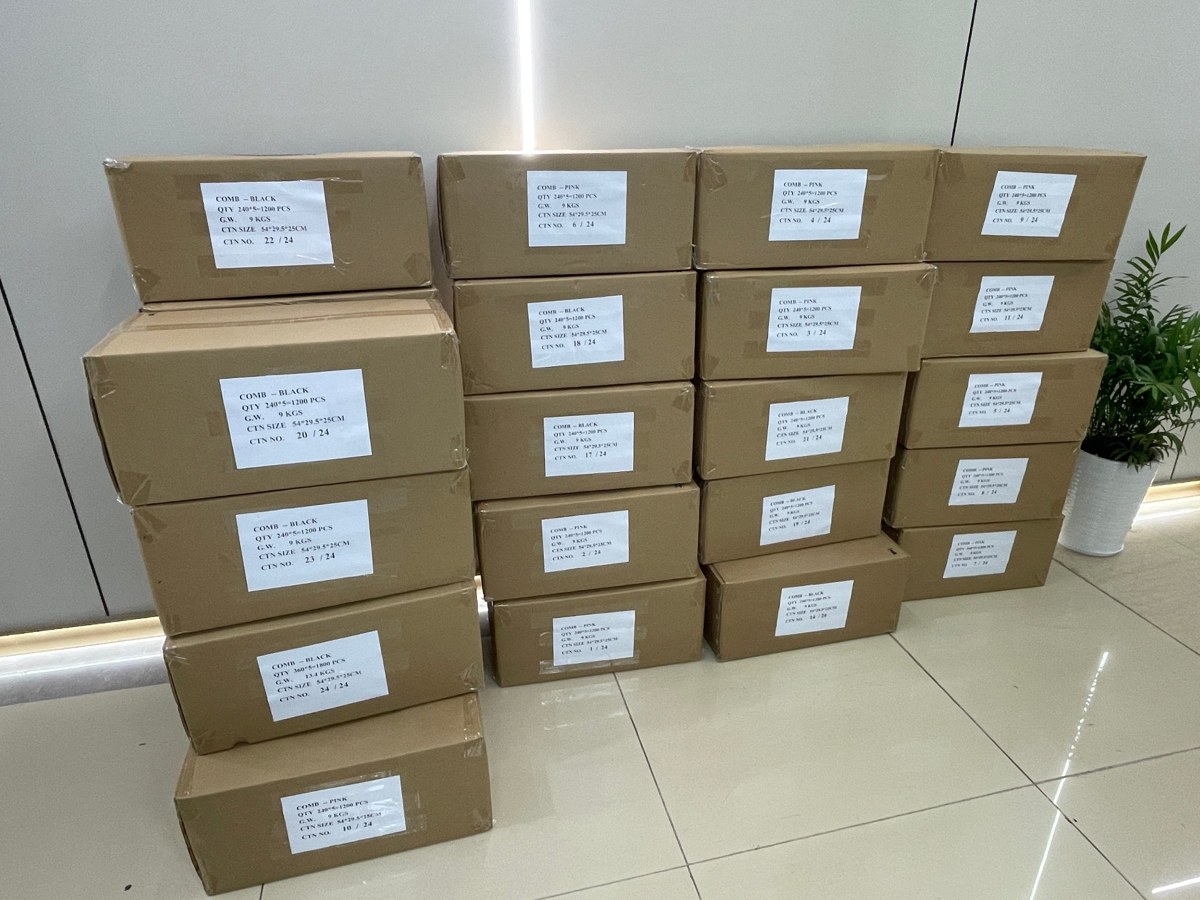
Choosing a hair brush assortment for a retail shelf looks simple — until 100+ SKUs from a supplier catalog land in your inbox and every one of them claims to be a bestseller.
The stores that sell through consistently don't pick brushes one by one. They build a structured assortment: a small set of core brush types, layered by price tier, backed by packaging that survives the shelf. Get this structure right and even a 12-SKU wall outperforms a competitor's 40-SKU mess.
This guide walks through the decisions that matter, in the order a professional buyer would make them — whether you run a beauty supply store, a salon retail corner, a pharmacy chain, or an online shop. It is written from the production floor: we have molded hair brushes and combs in Ningbo, China since 2012, and we ship private label programs to retail chains in more than 40 countries, so the numbers below are the ones we watch our customers actually trade on.
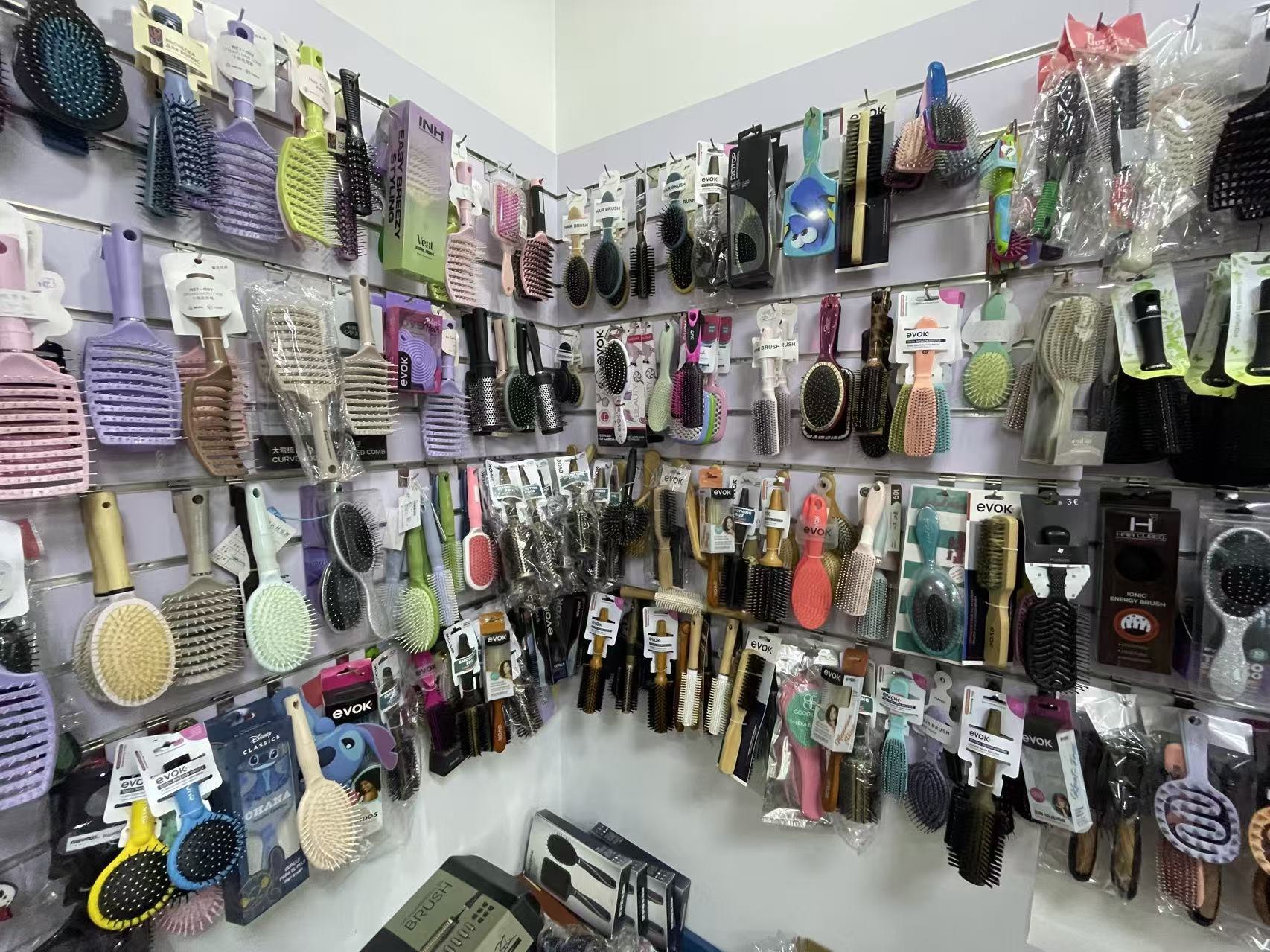
1. Start With Your Customer, Not the Catalog
Before comparing a single product, write down who actually pulls items off your shelf. Hair brush buyers fall into predictable groups, and each group shops differently:
| Buyer type | What they reach for | Price sensitivity |
|---|---|---|
| Daily commuters | Detangling brushes, compact cushions | Low — impulse buy |
| Parents buying for kids | Soft detanglers, bright colors | Medium |
| Styling-focused users | Round thermal brushes, vent brushes, rat tail combs | Low — they buy by function |
| Gift shoppers | Brush + comb sets, boxed sets | Low — packaging sells |
| Salon professionals | Reliable workhorses, bulk packs | High — they reorder on quality, not price |
Practical rule: your assortment should mirror this table. If gift shoppers walk past your store, you need at least two boxed sets. If you serve stylists, function brushes (vent, round, teasing) are non-negotiable even if they move slowly.
2. Build a Three-Tier Assortment
Professional retail buyers structure every category in three price tiers. This is the single most useful framework in the hair brush category:
| Tier | Role on your shelf | Typical wholesale profile | Share of SKUs |
|---|---|---|---|
| Entry | Traffic and volume; the brush customers grab without thinking | Simple cushion or detangling brush, plain or bulk packaging | ~50% |
| Mid | Margin driver; where brand-conscious customers land | Paddle brushes, premium finishes, printed header cards | ~30% |
| Premium | Image and gifting; slower turnover, higher ticket | Boxed sets, wooden handles, private-label packaging | ~20% |
Two traps this structure protects you from:
- The "all cheap" trap: an entry-only wall wins traffic but caps your average ticket. Mid and premium tiers exist to lift basket value.
- The "all pretty" trap: premium-only assortments look great and sit unsold. Entry brushes are what new customers try first — they are your acquisition tool.
A 12–24 SKU wall following this ratio will outsell a 60-SKU random mix almost every time, because customers can actually make a decision.
3. The Core Brush Types Every Retail Assortment Needs
Whatever your niche, these six categories cover 90% of real-world demand:
| Brush type | Who buys it | Retail note |
|---|---|---|
| Cushion brush | Everyday detangling, all ages | Your entry-tier workhorse; stock 2–3 colorways |
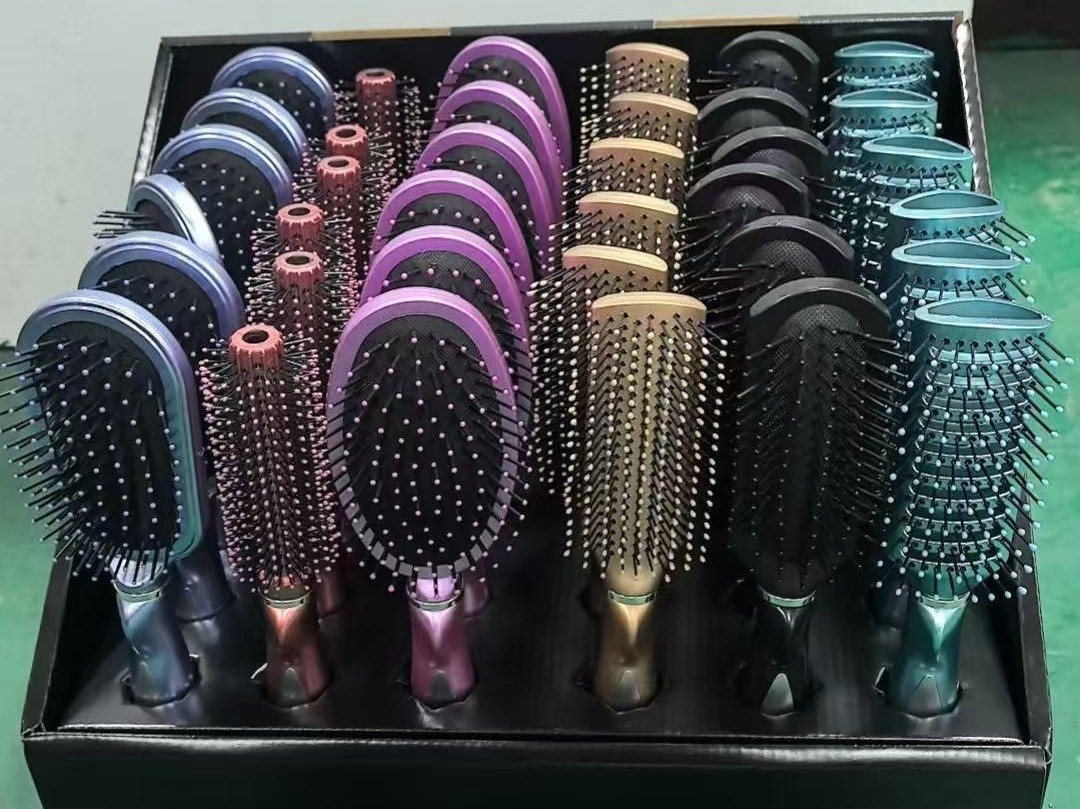
| Paddle brush | Long/thick hair, smoothing | Your mid-tier margin maker; see our paddle vs detangling comparison |
| Detangling brush | Kids, wet hair, curly hair | Fastest-growing segment; flexible bristles are the selling point |
| Vent brush | Blow-dry users | Function purchase; low price, steady velocity |
| Round brush | Styling with a dryer | Sizing matters — stock small (styling) and large (volume) |
| Combs (wide-tooth, rat tail) | Everyone; near-zero impulse resistance | Highest margin-per-unit in the category; cheap to ship |
Gaps in this list are where sales leak. If you stock brushes but no combs, you are turning away the easiest add-on sale in the store.
4. Quality Checkpoints Before You Place a Wholesale Order
Hair brushes fail at retail in predictable ways, and every failure mode is checkable on a sample in five minutes:
1. Ball-tip retention: twist a ball tip firmly with your fingers. If it rotates or lifts, bristle loss will generate returns.
2. Bristle pull test: grip a cluster of bristles and pull. Shedding on the sample means shedding in the carton.
3. Cushion resilience: press the pad hard and release. It should recover instantly with no visible glue line at the rim.
4. Heat tolerance: hold the brush 15 cm from a hair dryer on high for 2 minutes. Deformation or odor means failed heat resistance.
5. Static behavior: brush dry hair ten times. Excessive flyaway indicates no anti-static treatment — a common complaint for plastic pins.
6. Handle strength (paddle and round): flex the handle. Cheap plastic handles crack at the neck within weeks of daily use.
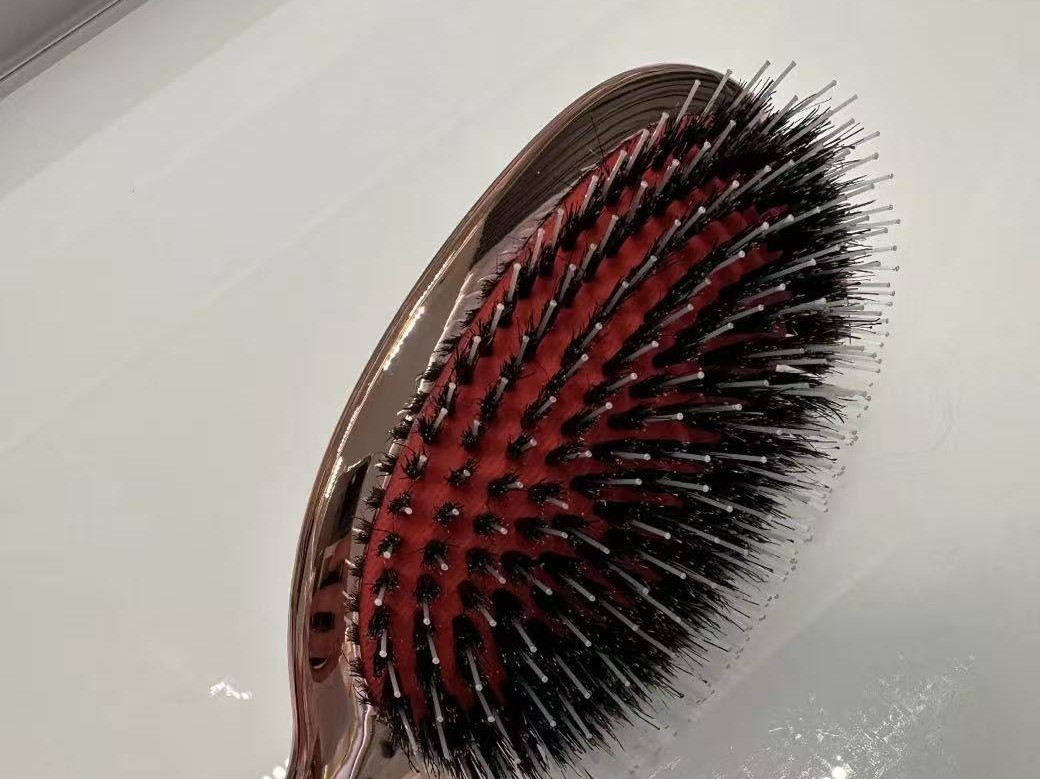
A serious manufacturer will pass all six without hesitation. If a supplier resists sample testing, treat it as data.
5. Packaging: The Decision That Moves Units
At retail, packaging often decides between two identical brushes. Decide these three things before ordering:
- Bulk vs. hanging: open-shelf brushes (bulk bins) maximize impulse traffic; hang-tag brushes command higher prices and keep the wall organized. Most successful stores run both.
- Private label: if you are building a store brand, private-label packaging (your logo on the handle and header card) typically costs only marginally more at wholesale volumes — the private label manufacturing process explains what a factory needs from you.
- Boxed sets for gifting: a brush + comb set in a box with a window can retail at 2–3× the sum of loose items. Gift seasons (December, Mother's Day) reward stores that planned sets in advance — see our hairbrush set program.
6. Margin Math for Wholesale Buyers
Run this calculation before comparing supplier quotes — the lowest unit price is rarely the best deal:
```
Landed cost per unit = FOB price + freight + duty + packaging
Retail margin % = (retail price − landed cost) ÷ retail price
```
Two rules of thumb for hair accessories retail:
- Entry brushes should land at 55–65% retail margin even after freight — they exist for velocity, not profit.
- Mid and premium tiers should hold 65–75% margins; private-label packaging is what makes these tiers defensible against competitors selling the same factory brush.
Also weigh reorder reliability: a supplier who ships in 20 days at a slightly higher price beats one who quotes cheap and ships in 50. A stockout on your best-selling brush costs more than the price difference on the whole order.
7. Five Buying Mistakes That Eat Retail Margins
1. Ordering from pictures. Factory photos hide ball-tip and cushion quality. Always sample first.
2. Ignoring colorway planning. 3–4 colors per entry SKU outsell 1 color; but 8 colors of one brush will strand inventory.
3. No MOQ strategy. New test items should be orderable at low MOQ; commit to full quantities only after a sell-through cycle.
4. Skipping packaging in the cost calc. A header card adds cents but lifts retail price by a dollar or more.
5. Single-supplier dependency. Have a second qualified factory for your top 3 SKUs — even if you split orders 80/20.
FAQ
How many hair brush SKUs should a small retail store start with?
12–24, structured across the three tiers (roughly 50% entry, 30% mid, 20% premium) and covering all six core brush types. Depth beats breadth at the start.
What MOQ should I expect from a hair brush factory?
For brushes made from a factory's existing molds, 1,200 pcs per item is a common standard — at our own line it is the default for stocked molds, with lower trial quantities possible on first orders. Full private label with custom packaging usually starts around 1,000–3,000 pcs per design. Worth asking any supplier what they can do for a trial run before you commit.
Are wooden brushes worth stocking?
Yes, as a premium tier. They justify higher retail prices, photograph well for online stores, and appeal to eco-conscious shoppers — but treat them as 10–20% of the wall, not the core.
How often should I refresh the assortment?
Review sell-through quarterly. Replace the bottom 10–20% of SKUs and add 2–3 new items — enough to keep the wall fresh without stranding stock.
What is the difference between OEM and private label for retail?
Private label means the factory's existing brush sold under your brand and packaging; OEM means custom tooling to your design. Most retail stores start with private label and graduate to OEM once volumes justify mold costs — the full breakdown is in our private label manufacturing guide.
Ready to build your assortment? We manufacture cushion, paddle, detangling, vent and round brushes — plus combs and boxed gift sets — for beauty retailers in more than 40 countries, with low trial MOQs and full private-label support. Browse the wholesale hair brush range → or request a quotation with samples → — tell us your market and price tier, and our team will map a starter assortment to your shelf within one business day.
Need a hair brush supplier?
We manufacture plastic hair brushes, detangling brushes and hairbrush sets in Ningbo, China. Get factory-direct prices with your logo.
Get a Quote